- On sale!
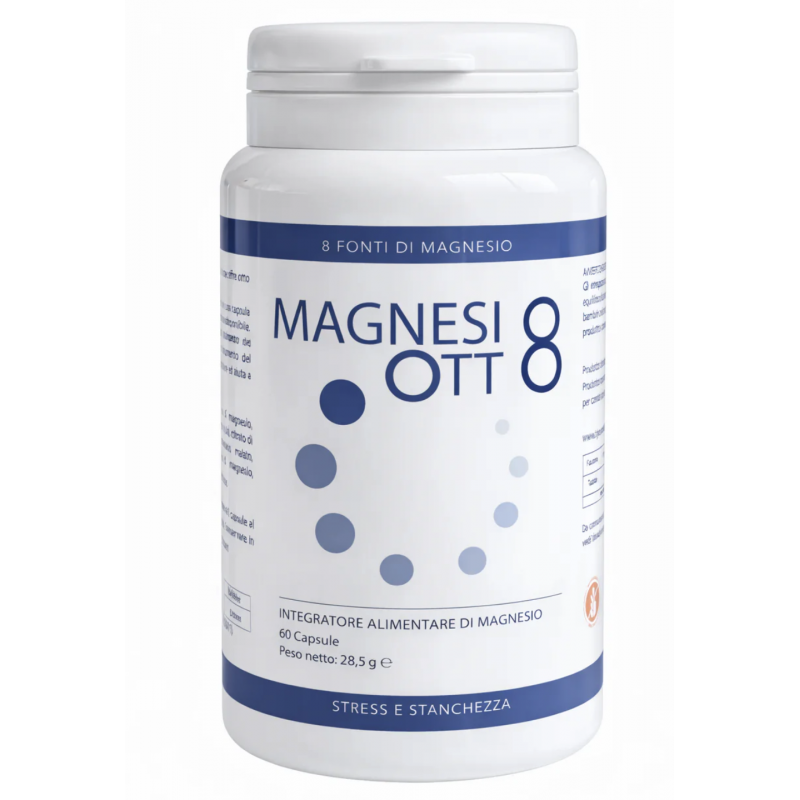
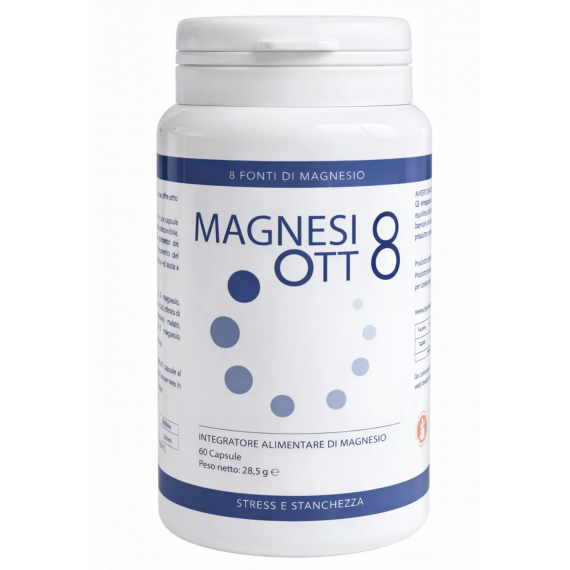

MAGNESIUM OTTO - Mg8 is a Magnesium supplement that offers eight different types of full-action magnesium compounds.
Bio-Clock has developed a formula that contains in a capsule a balanced supply of highly bio-available magnesium.
Magnesium is an essential mineral for LIFE.
MADE IN ITALY Exclusive Bio-Clock formula
MAGNESIUM OTTO - Mg8 is a Magnesium supplement that offers eight different types of full-action magnesium compounds.
Bio-Clock has developed a formula that contains in a capsule a balanced supply of highly bio-available magnesium.
Magnesium is an essential mineral for LIFE.
MADE IN ITALY Exclusive Bio-Clock formula
MAGNESIO OTTO – Mg8 is a Magnesium supplement that offers eight different types of full-action magnesium compounds.Bio-Clock has developed a formula that contains in a capsule a balanced supply of highly bioavailable magnesium.
Magnesium contributes to the normal functioning of the nervous system, to normal muscle function and helps to reduce fatigue and tiredness.
WHAT IS MAGNESIUM FOR?
Magnesium is one of seven essential macrominerals. Microminerals, such as iron and zinc, are just as important, though people need them in smaller amounts. Magnesium is vital for many bodily functions. Getting enough of this mineral can help prevent or treat chronic diseases, including Alzheimer's disease, type 2 diabetes, cardiovascular disease, and migraine. Magnesium is a fundamental mineral for LIFE , in fact it is involved in numerous physiological processes in the human body.
Why is magnesium very important?
- Magnesium is used for the regulation of other minerals such as Calcium (Ca), Potassium (K) and Sodium (Na);
- Magnesium is involved in over 290 enzymatic activities
- Magnesium is useful for supporting normal energy metabolism and normal functionality of the nervous system.
- Magnesium supports the body in terms of normal energy and physical performance.
- It is useful in situations of depression and migraine.
WHEN and WHY IS MAGNESIUM NEEDED?
A varied and balanced diet and a healthy lifestyle are fundamental to maintain a good general state of health, however, sometimes the body may suffer from a mineral deficiency and in particular from magnesium.
This possible deficiency is often due to a multi factorial causes.
In fact, in modern times, nutrient poverty of the most consumed foods can lead in the medium to long term to a decrease in the daily intake of magnesium.
Among the main causes are:
nutrient poverty (intensive cultivation); use of fertilizers and pesticides;
western diet: fast and incomplete meals from a nutritional point of view;
preservatives; overcooking food.
Other possible causes that can generate a magnesium deficiency due to increased needs of the subject are:
stress; physiological dysfunctions; intense physical activity (sports); intense study; mental and physical work.
HOW MUCH MAGNESIUM TO TAKE?
In the case of supplementation, the quantity of Magnesium is subjective and varies according to age.
The average daily requirement of Magnesium varies according to age and gender.
The European directives ( EFSA Journal 2009-2019 ) suggest an average intake of 250 mg per day in adults and 375 mg per day in the elderly (& 75 years).
The maximum daily intake guaranteed by EFSA in European countries is 450 mg per day.
Generally : 1-2 capsules a day in the morning.
WHY OUR FORMULA CONTAINS 8 TYPES OF MAGNESIUM?
Our team has studied and developed this innovative formula with 8 type of magnesium to ensure maximum bio-availability of Magnesium and ensure correct absorption by the body through a balanced, stable and compatible formulation with the body.
The exclusive formula of MAGNESIUM OTTO - Mg8 is in fact highly bio-available and free of any type of additive.
MAGNESIUM - Mg8 contains 8 types of Magnesium and in particular:
Magnesium Citrate, Magnesium malate, Magnesium Pindolate, Magnesium Orotate, Magnesium Carbonate, Magnesium Bisglycinate, Magnesium Oxide and Magnesium Gluconate.

1) EFSA Journal 2009; 7(9):1216, 8(10):1807, 2015;13(7):4186 2) Dr. Med. U. Selz, Migräne Ade! Caralin Verlag, 2015 3) Carolyn Dean. The magnesium miracle. Ballentine Books New York 2007 4) Swaminathan R. Magnesium metabolism and its disorder. Clin Biochem Rev 2003 5) Nathan S.S. Atkinson et al. “Lemonade Legs”: Why do Some Patients Get Profound Hypomagnesaemia on Proton-Pump Inhibitors? Intest Res 2015 6) Karppanen H et al. Why and how to implement sodium, potassium, calcium and magnesium changes in food items and diets? Journal of Human Hypertension 2005 7) Abbasi B et al. The effect of magnesium supplementation on primary insomnia in elderly: A double-bind placebo controlled clinical trial. J Res Med Sci 2012 8) Fatuzzo P et al. (2016). Review: UPDATE sul metabolismo del magnesio; 9) Firoz M et al. (2001). Bioavailability of US commercial magnesium preparations; Mag Res 10) Galan P et al. (1997). Dietary magnesium intake in a French adult population; Mag Res 11) Gröber U et al. (2015). Magnesium in Prevention and Therapy. Review; Nutrients 12) Knochel JP (1991). Disorders of magnesium metabolism; Har Princ Int Med 13) Mayer AM (1997). Historical changes in the mineral content of fruits and vegetables; Brit Food J 14) Ranade VV et al. (2001). Bioavailability and pharmacokinetics of magnesium after administration of magnesium salts to humans; Am J Ther 15) Rude RK (2010). Magnesium; Encyclopedia of Dietary Supplements. 2nd ed. New York, NY: Informa Healthcare 16) Rylander R (2014). Bioavailability of Magnesium – A Review; J Pharm Nutr Sci 17) Walker AF et al. (2003). Mg citrate found more bioavailable than other Mg preparations in a randomised, double-blind study; Mag Res 18) White J et al. (1992). Blood and urinary magnesium kinects after oral magnesium supplementation; Clin Ther 19) Workinger JL et al. (2018). Challenges in diagnosis of magnesium status – review; Nutrients 20) Magnesio. Come reintegra un minerale utile per la nostra salute, 2009
During menopause, some disorders may occur due to the drop in estrogen hormones and a decrease in minerals and vitamins that regulate the well-being of the body. Hot flashes, cold sweats, disturbed sleep, exhaustion, irritability and mood swings are typical disorders of the menopause period, also attributable to a deficiency of magnesium. The need for this mineral increases due to a lower absorption of the nutrients contained in food and their greater elimination through the urine. Hormones also control and regulate the continuous formation and elimination of bone cells. With menopause this uninterrupted turnover decreases and magnesium becomes fundamental for the maintenance of a good bone structure. In all these cases of magnesium deficiency, it may be useful to resort to a specific supplement.